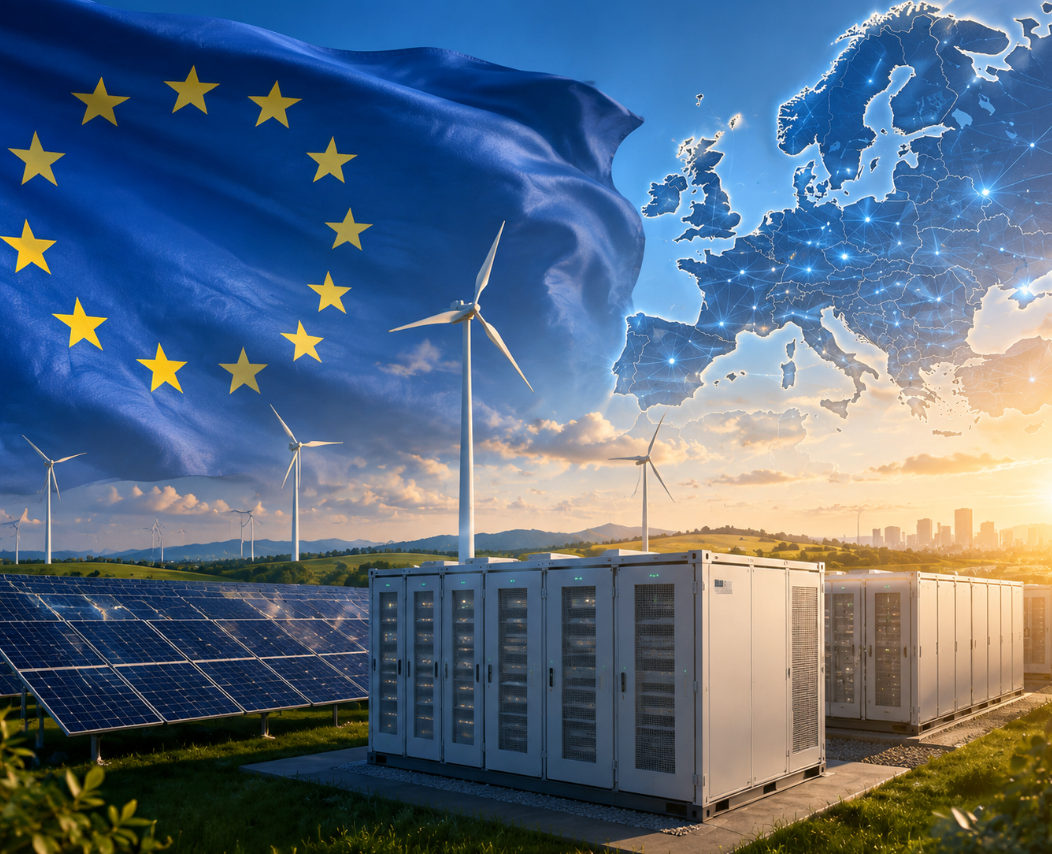

Europe’s energy transition is accelerating, and energy storage is becoming one of the key technologies supporting the future power system.
On July 17, 2026, the European Commission officially released the Electrification Action Plan, aiming to accelerate electrification across transportation, buildings, and industrial sectors. The plan encourages more applications to switch from fossil fuels such as oil and natural gas to direct electricity use.
Among the key topics mentioned in the plan, energy storage has gained increasing attention.
According to the European Commission, Europe’s energy storage capacity needs to increase from approximately 55GW in 2026 to 200GW by 2030, and further reach 500GW by 2040 to support future energy system flexibility.
Based on current capacity, Europe may need around 145GW of additional storage capacity by 2030.
It is important to note that these figures refer to power capacity (GW), not battery energy capacity (GWh). The target also includes different storage technologies, including pumped hydro storage, thermal storage, long-duration energy storage, and battery energy storage systems (BESS). However, battery storage is expected to become one of the most important parts of future energy storage growth.
Why Does Europe Need More Energy Storage?
The reason behind Europe’s increasing focus on energy storage is closely related to its ongoing electrification process.
Over the past few years, Europe has invested heavily in renewable energy, especially wind and solar power. However, renewable energy generation has natural limitations because it depends on weather conditions and cannot always match electricity demand in real time.
At present, electricity accounts for only around 23% of final energy consumption in the European Union. Many vehicles still rely on gasoline and diesel, many buildings use natural gas for heating, and many industrial processes continue to depend on fossil fuels.
To accelerate the energy transition, the EU plans to increase electrification across different sectors:
The European Commission is studying a long-term goal of increasing the EU’s electrification rate to 46% by 2040. According to EU estimates, achieving this target could help reduce fossil fuel import costs by approximately €260 billion per year.
However, higher electrification also creates new challenges for the power system. As more EVs, heat pumps, and industrial electrical equipment are connected to the grid, electricity demand will continue to increase.
Without sufficient energy storage, grid expansion, and flexibility solutions, Europe may face challenges such as grid congestion, renewable energy curtailment, and electricity price fluctuations.
This is why energy storage has become an essential part of Europe’s future energy strategy.
Europe Needs Faster Energy Storage Deployment
According to current European targets, energy storage deployment needs to accelerate significantly in the coming years.
To achieve the 2030 target, Europe will need approximately 145GW of additional storage capacity compared with current levels.
Previous EU policy discussions indicate that Europe may need to add around 30GW of storage capacity annually to meet future energy system requirements. This growth rate is much higher than the deployment speed seen in previous years.
To encourage real project development, the EU has also started coordinating governments, financial institutions, and industry companies through energy storage initiatives.
Currently, 17 EU member states have submitted energy storage deployment commitments for 2026-2028, while another five countries are expected to submit plans before the end of 2026.
Some countries have already announced relatively clear targets:
However, these commitments are currently market signals rather than legal obligations. The actual implementation of storage projects will depend on factors such as government support, grid connection approval, electricity market mechanisms, and financing conditions.
Market Challenges: Energy Storage Needs Better Business Models
Although Europe has set ambitious storage targets, market development still faces several challenges.
One important issue is the so-called “double charging” problem.
In some European countries, energy storage systems may be charged network fees when they consume electricity and may also face additional fees when electricity is released back to the grid. This increases operating costs and affects project profitability.
For investors and developers, the success of an energy storage project depends not only on equipment costs but also on long-term revenue stability.
Factors such as electricity market participation, capacity mechanisms, grid access, and regulatory clarity will directly influence whether projects can achieve sustainable returns.
Therefore, Europe’s future storage growth will depend not only on increasing installed capacity but also on creating a market environment that supports long-term investment.
Growing Opportunities Across the Energy Storage Supply Chain
The expansion of Europe’s energy storage market will create opportunities across the entire electrical supply chain.
Although the 200GW target does not mean that 145GW of battery storage projects will immediately enter construction, it clearly shows the long-term direction of Europe’s energy system.
As energy storage projects become larger and more complex, demand will continue to grow for key components and technologies, including:
→ Battery charging systems
→ Power conversion equipment
→ Power modules
→ Electrical components
→ Energy management systems
→ Protection and control components
For global project developers, system integrators, and equipment manufacturers, finding reliable suppliers with technical understanding and stable delivery capabilities will become increasingly important.
As an electrical component sourcing partner, Allblue helps global customers identify suitable components, evaluate suppliers, and manage reliable supply chains for power electronics and energy-related applications.
With experience in electrical components and global procurement, Allblue supports customers by connecting application requirements with suitable supply solutions, helping projects improve efficiency, reduce sourcing complexity, and maintain stable product quality.
As Europe continues to expand renewable energy and electrification, reliable supply chain support will play an increasingly important role in bringing energy storage and power solutions from concept to real-world applications.