
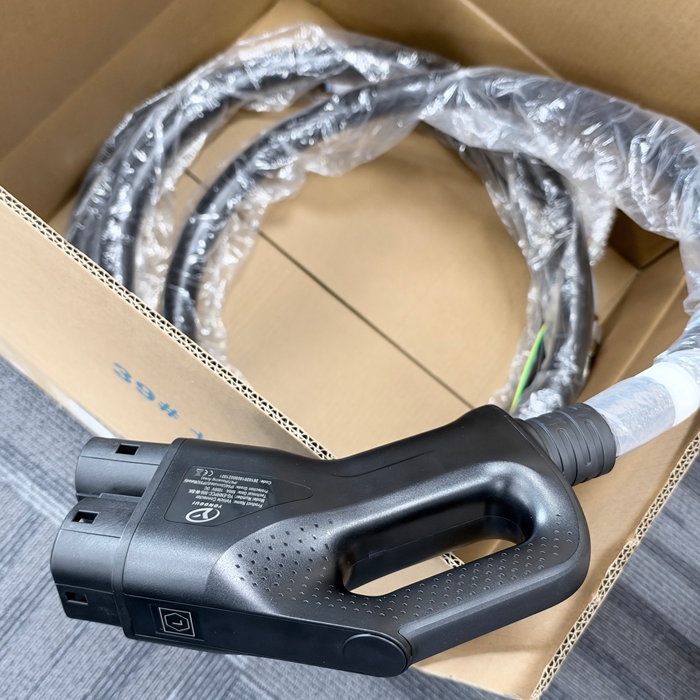
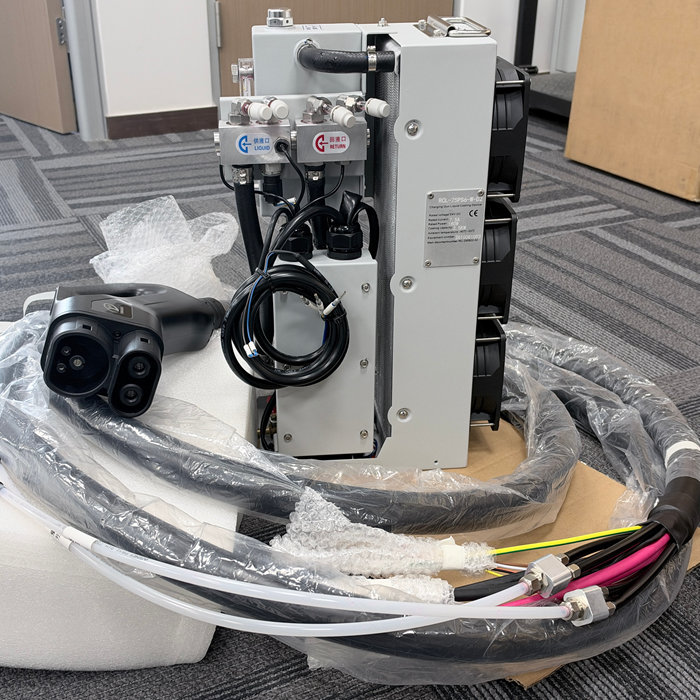
Max.1000V High-Voltage Liquid-Cooled Charging Gun
Product Name: Liquid-Cooled Charging Gun
Cooling system power: 2.5 kW
Coolant: Antifreeze
Coolant flow rate: 4.0 L/min @ 350 kPa
Maximum pressure: 0.6 MPa
Operating temperature: -40°C to 55°C
Ingress protection (IP) rating: IP55
Communication interface: RS485
Product Introduction
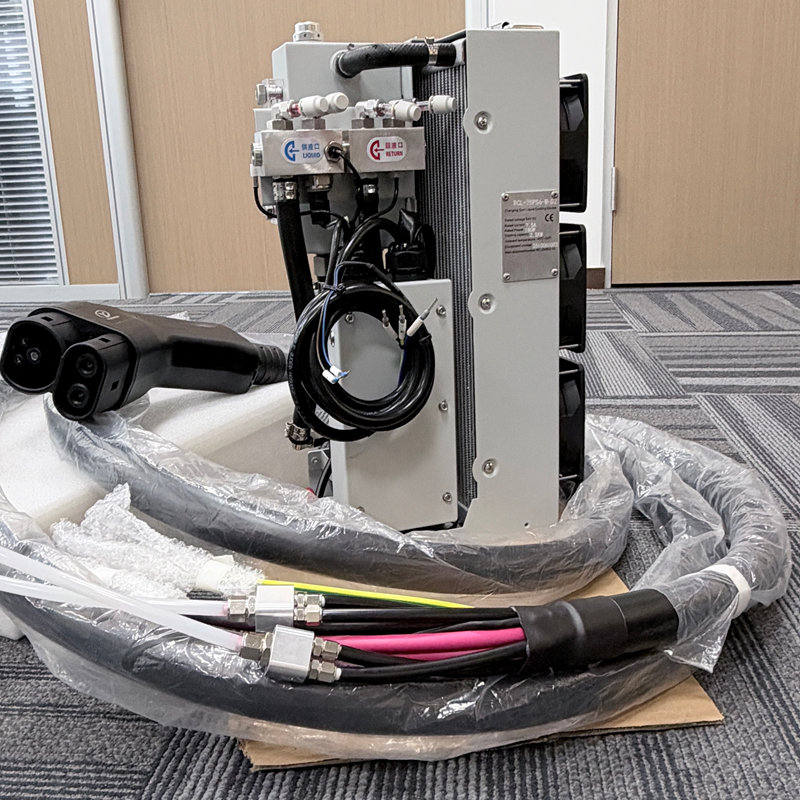
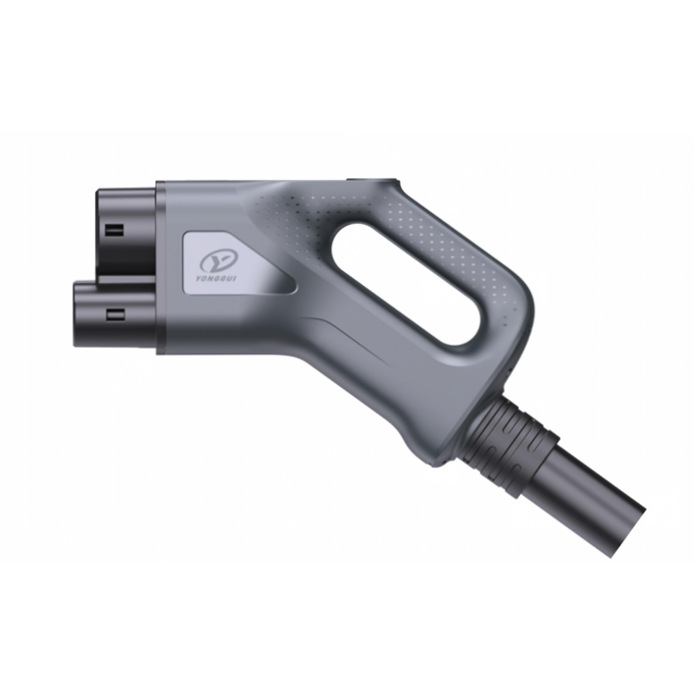
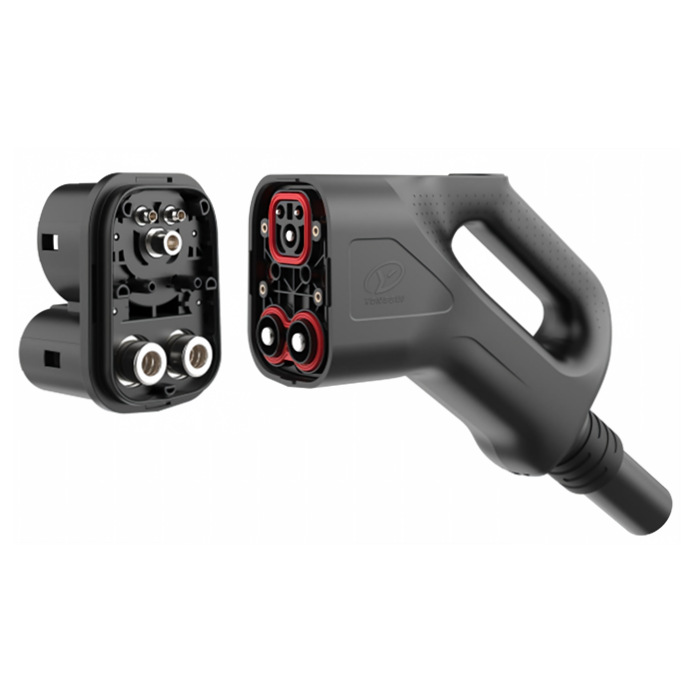
The YG-ENHPCC-W is a liquid-cooled DC charging connector designed and developed in-house. It utilizes OEVC-35—a thermal management fluid for electric vehicles (a 50% ethylene glycol solution)—as its cooling medium. The fluid circulation system features one inlet and two outlets. The charging gun complies with the latest standards, including IEC 62196-1:2022, IEC 62196-2:2022, IEC 62196-3:2022, and PD IEC TS 62196-3-1:2020. It is available in two rated current specifications: 500A and 600A.
This high-voltage charging gun must be used in conjunction with a liquid-cooling system to ensure safety and stability during 1000V high-voltage fast charging. The liquid cooling system has a power rating of 2.5 kW. It can automatically adjust the output power of its fans and water pumps based on charging conditions, ensuring high efficiency and energy savings.
Key Features
- The charging gun features an integrated housing design, offering a high level of protection and safety; this eliminates the risks associated with two-piece housings when used in harsh environments.
- All terminals are designed for quick replacement, reducing long-term maintenance costs. Even after the quick-replaceable components are removed, the internal high-voltage chamber maintains an IP67 protection rating.
- Power terminals are silver-plated and ultrasonically welded, resulting in lower electrical resistance, reduced temperature rise, and superior long-term stability. A built-in, high-precision temperature sensor continuously monitors and reports the internal temperature of the charging gun.
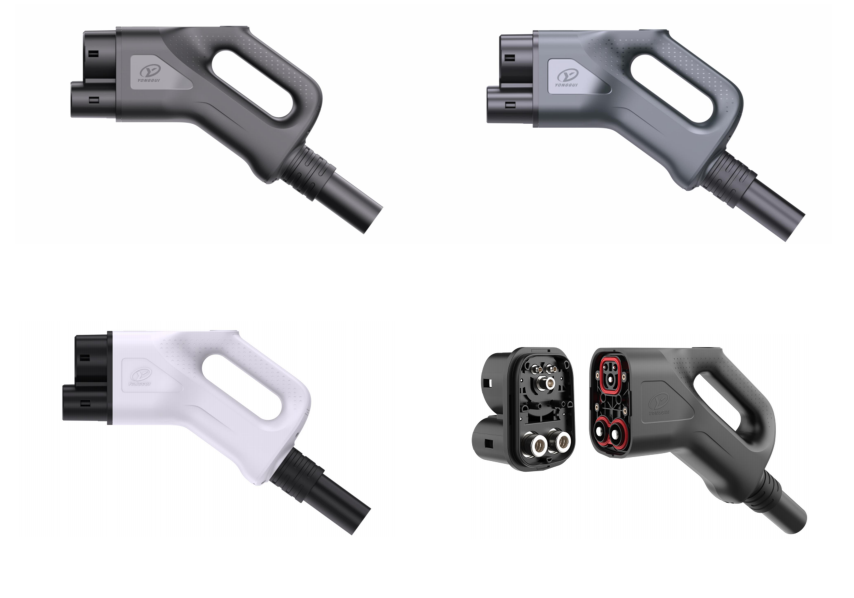
- The charging gun boasts a sleek, aesthetic design with an ergonomically angled handle, ensuring a comfortable and natural operation during plug-in, thereby enhancing the overall user experience.
- The internal cable routing utilizes wide-angle bends, effectively preventing the risk of the cable detaching from the ultrasonically welded terminal connection.
- Compared to conventional DC charging cables, this cable is lighter and slimmer—featuring a 25% reduction in diameter and a 10% decrease in weight.
Appearance and structure
Technical Data
Electrical and Technical Specifications
| Port Definition | DC+ | PE | CP | PP |
|---|---|---|---|---|
| Rated Operating Voltage (DC) | 1000V | / | 0–30V | 0–30V |
| Rated Operating Current (DC) | 500A/600A | / | 2A | 2A |
| Cable Specification (mm²) | 2 × 35 | 6 | 0.75 | 0.75 |
| Contact Terminal Diameter (mm) | Φ8 | Φ6 | Φ3 | Φ3 |
| Contact Resistance | ≤0.3mΩ | ≤0.4mΩ | ≤3mΩ | |
| Insulation Resistance | ≥500MΩ (1000V DC) | |||
| Withstand Voltage (DC Steady State) | 3000V AC | |||
| Coolant | 50% Ethylene Glycol Solution | |||
| Operating Temperature | -40°C to +125°C | |||
| Working Supply Pressure | ≤3.5 bar | |||
| Working Flow Rate | 1.8–3.0 L/min | |||
| Current Capacity Without Liquid Cooling | 125A | |||
| Conductor Heat Generation Power | XXX | |||
Mechanical Performance Specifications
| Mechanical Performance Specifications | |
|---|---|
| Service Life | ≥10,000 Mating Cycles |
| Insertion / Extraction Force | <100N |
Environmental Performance Specifications
| Environmental Performance Specifications | |
|---|---|
| IP Rating (Unmated) | IP54 |
| IP Rating (Mated) | IP55 |
| IP Rating (Inside High-Voltage Housing) | IP67 |
| Operating Ambient Temperature | -30°C to +50°C |
| Derating Temperature | 85°C |
| Charging Shutdown Temperature | 90°C |
| Note: Derating temperature: 85°C; charging shutdown temperature: 90°C. | |
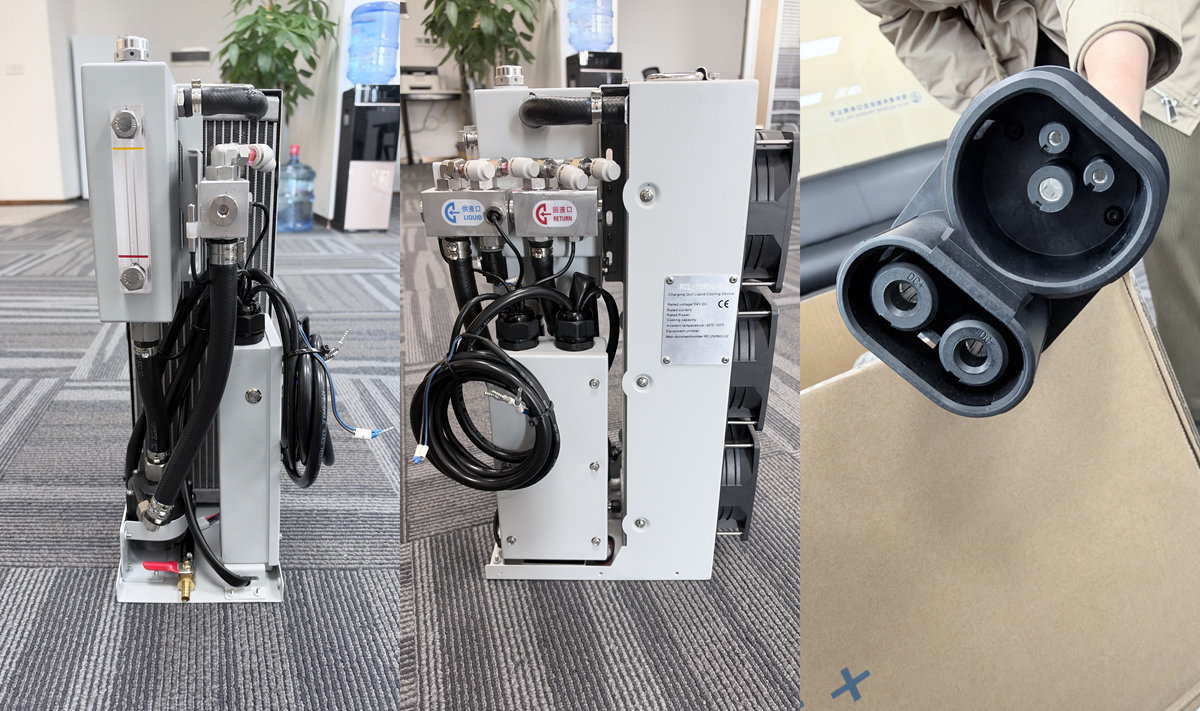
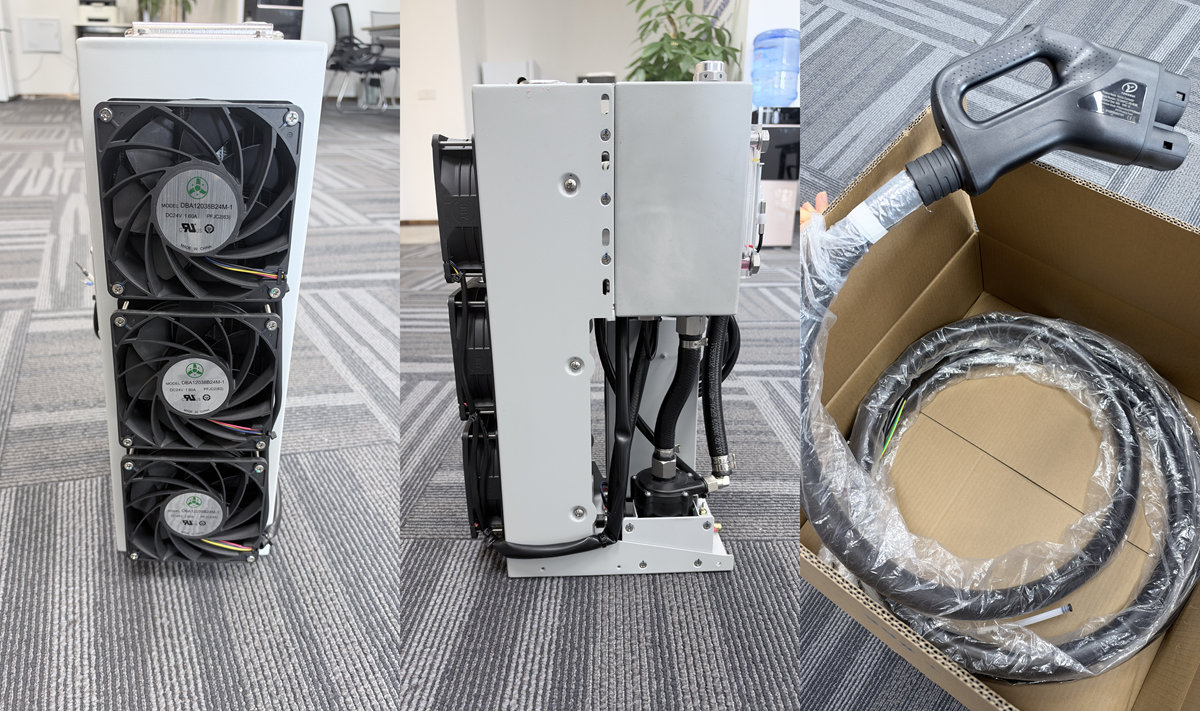
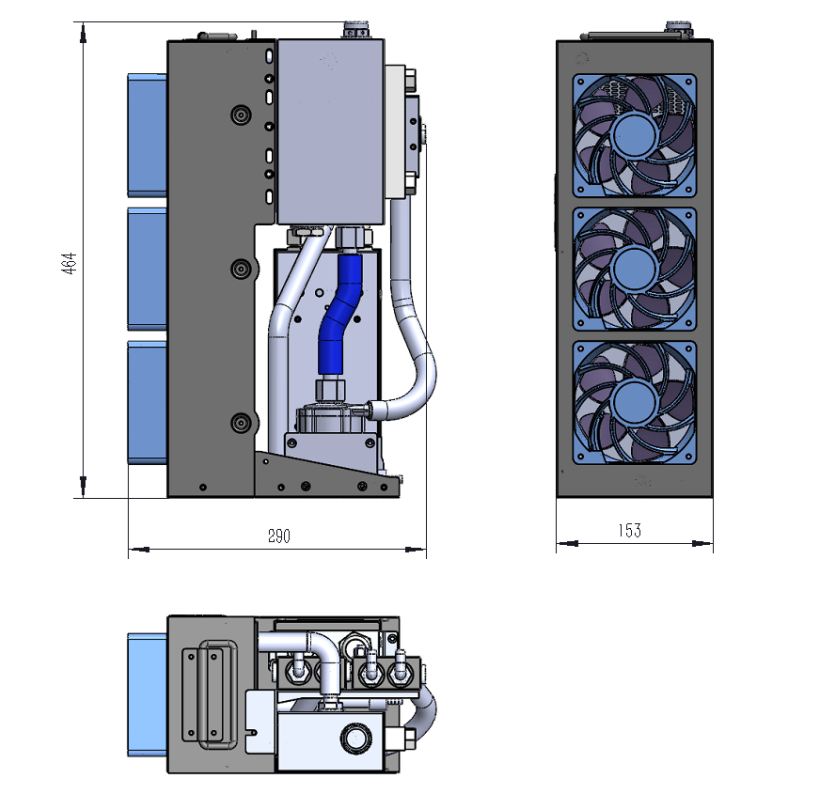
Liquid cooling system
| Liquid Cooling System Technical Specifications | |||
|---|---|---|---|
| Dimensions | L290 × W153 × H464 mm | Heat Dissipation Capacity | 2.5 kW @ 4 L/min |
| Rated Voltage | DC 24V | Maximum Power | ≤170W |
| Cooling Medium | Antifreeze Coolant | Medium Flow Rate | 4.0 L/min @ 350 kPa |
| Maximum Pressure | 0.6 MPa | Operating Temperature | -40°C to +55°C |
| Weight | 7.5 kg | Reservoir Capacity | 1.0 L |
| Noise Level | ≤65 dB(A) @ 1 m | Protection Rating | IP55 |
| Control Method | Fully Automatic | Communication Interface | RS485 |
| Service Life | 50,000 h | ||
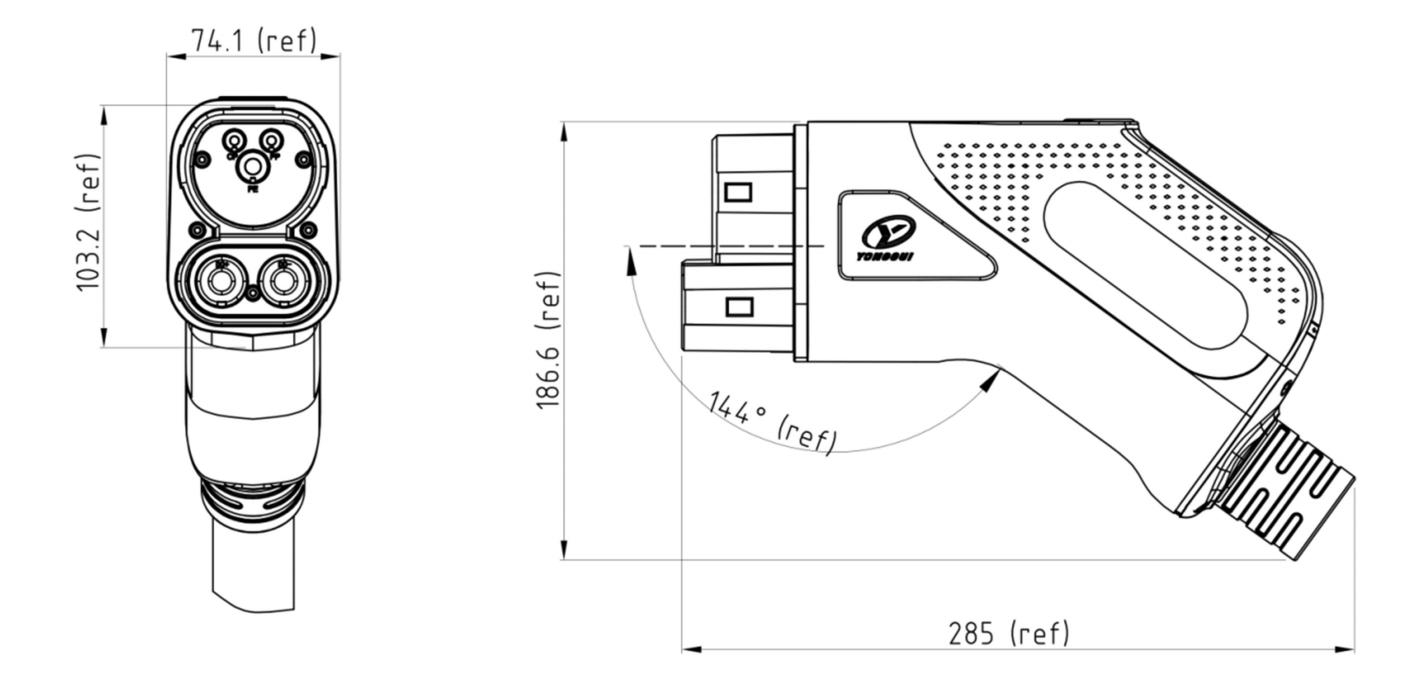
Product Dimensions Drawing
Charging gun
Liquid cooling system
Usage Precautions
(1) This product is equipped with an IEC vehicle connector and is intended solely for connecting to DC charging equipment to charge electric vehicles.
(2) Do not modify or disassemble the charging connector yourself; doing so may lead to charging malfunctions or, in severe cases, a fire. It is recommended to stop charging during thunderstorms, as lightning strikes may damage the charging equipment.
(3) Before plugging in, inspect the vehicle’s charging socket for water droplets, foreign objects, or any visible abnormalities. If the charging connector becomes stuck or difficult to insert, check both the connector head and the vehicle socket for foreign objects. If no foreign objects are found but the connector still cannot be inserted or removed properly, contact the manufacturer for assistance.
(4) In the event of an insulation fault, first ensure the power supply is disconnected (turn off the main circuit breaker if necessary). Check the mating surface of the connector head for water; if present, wipe it dry. Then, use a multimeter to measure the insulation resistance between the terminals (excluding the resistance between the PE and PP pins). A reading of ≥500 MΩ is considered normal; otherwise, contact the manufacturer for assistance.
(5) If a charging connection error occurs, first ensure the power supply is disconnected (turn off the main circuit breaker if necessary). Use a multimeter to measure the resistance between the PE and PP pins. A reading of 1500 ±15 Ω is considered normal; otherwise, contact the manufacturer for assistance.
(6) Cleaning must only be performed when the product is not powered. Use a dry cloth to clean electrical and other components. Do not use corrosive cleaning agents, high-pressure water jets, or steam cleaners.
(7) Regularly clean the charging interface—especially the metal pins inside the connector—by wiping them with alcohol to ensure they remain free of debris.
(8) Most components of this product are made of thermoplastic; avoid subjecting the product to external impacts, as this may impair its functionality.
(9) During use, avoid excessive twisting of the cable; the bending radius must not be less than 10 times the cable diameter. OD; ensure the cable extends naturally to the vehicle’s charging socket;
do not pull or tug on the cable with force.
(10) Do not use adapters or extension cords when operating this product.
(11) Do not allow the vehicle to run over the charging plug or cable. Ensure the cable is laid on a flat surface, and avoid placing it where sharp stones or debris could scratch the cable sheath.
(12) When the charging plug is not in use, ensure it is properly returned to its designated holster on the DC charging unit.
Photos of the actual shipment